
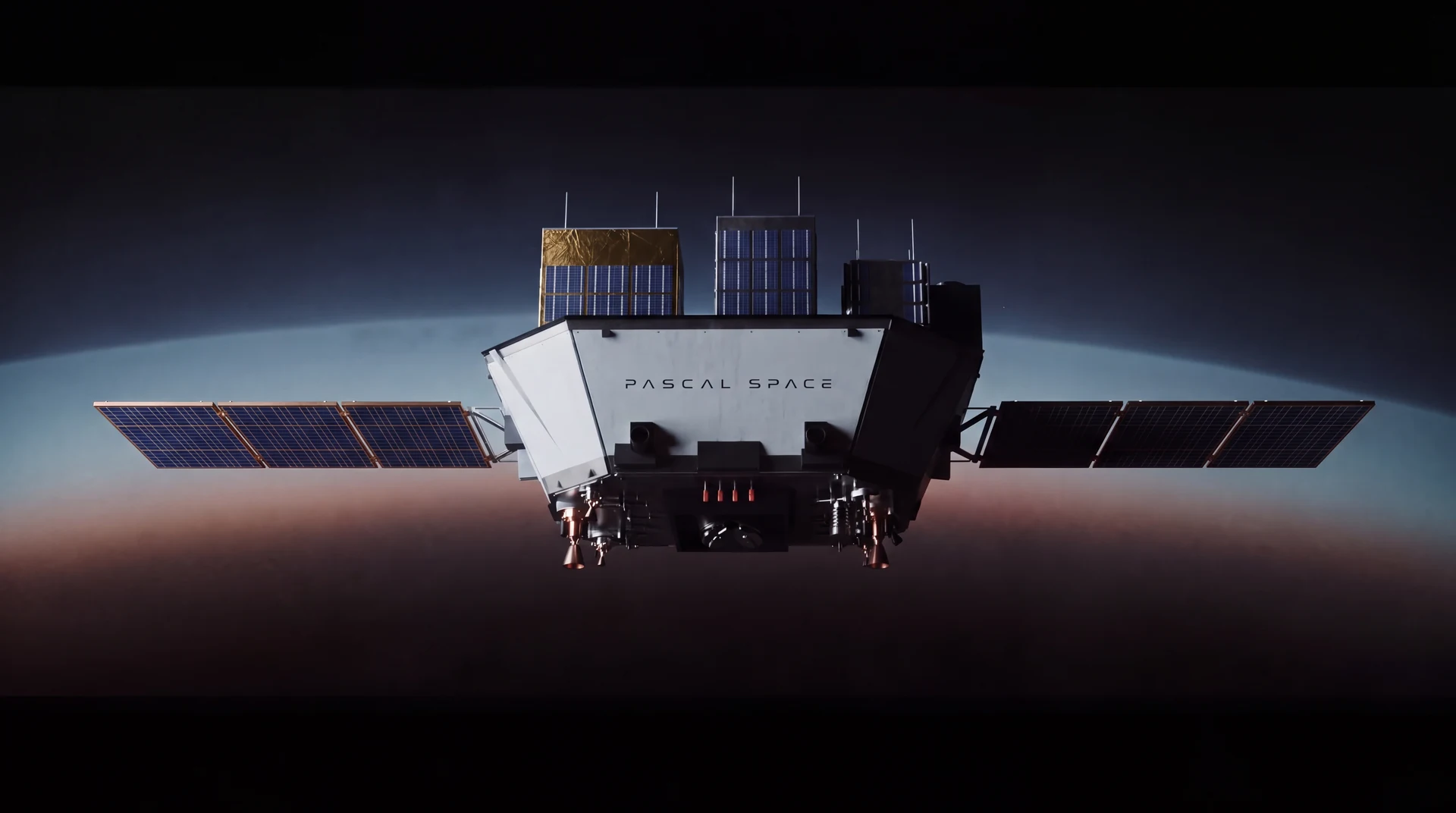
The vehicle
From launch orbit
to working orbit.
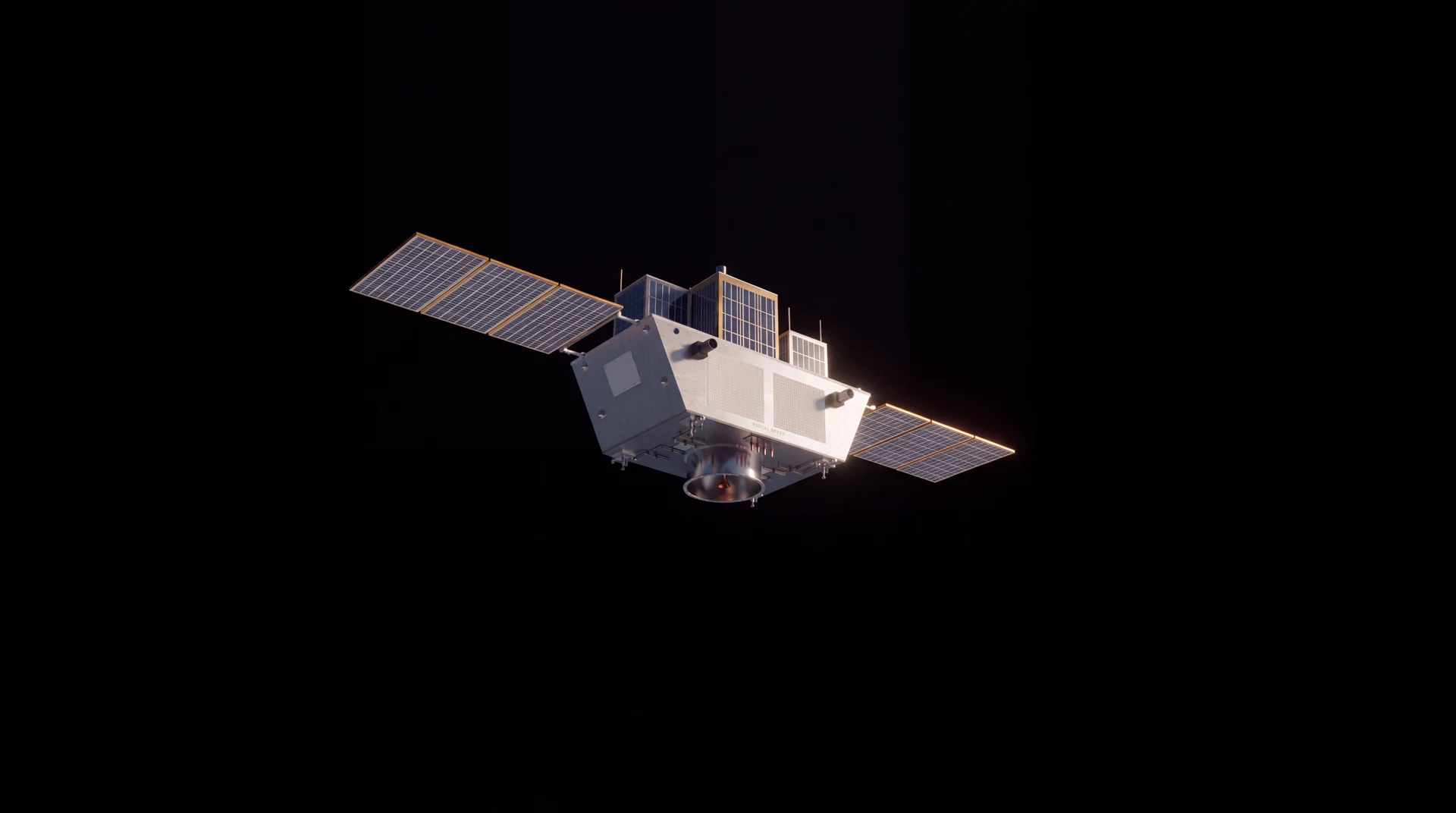
SAAR is Pascal’s orbital transfer vehicle in development. It’s designed to carry payloads from launch to their planned destination in low Earth orbit, or support them on board.
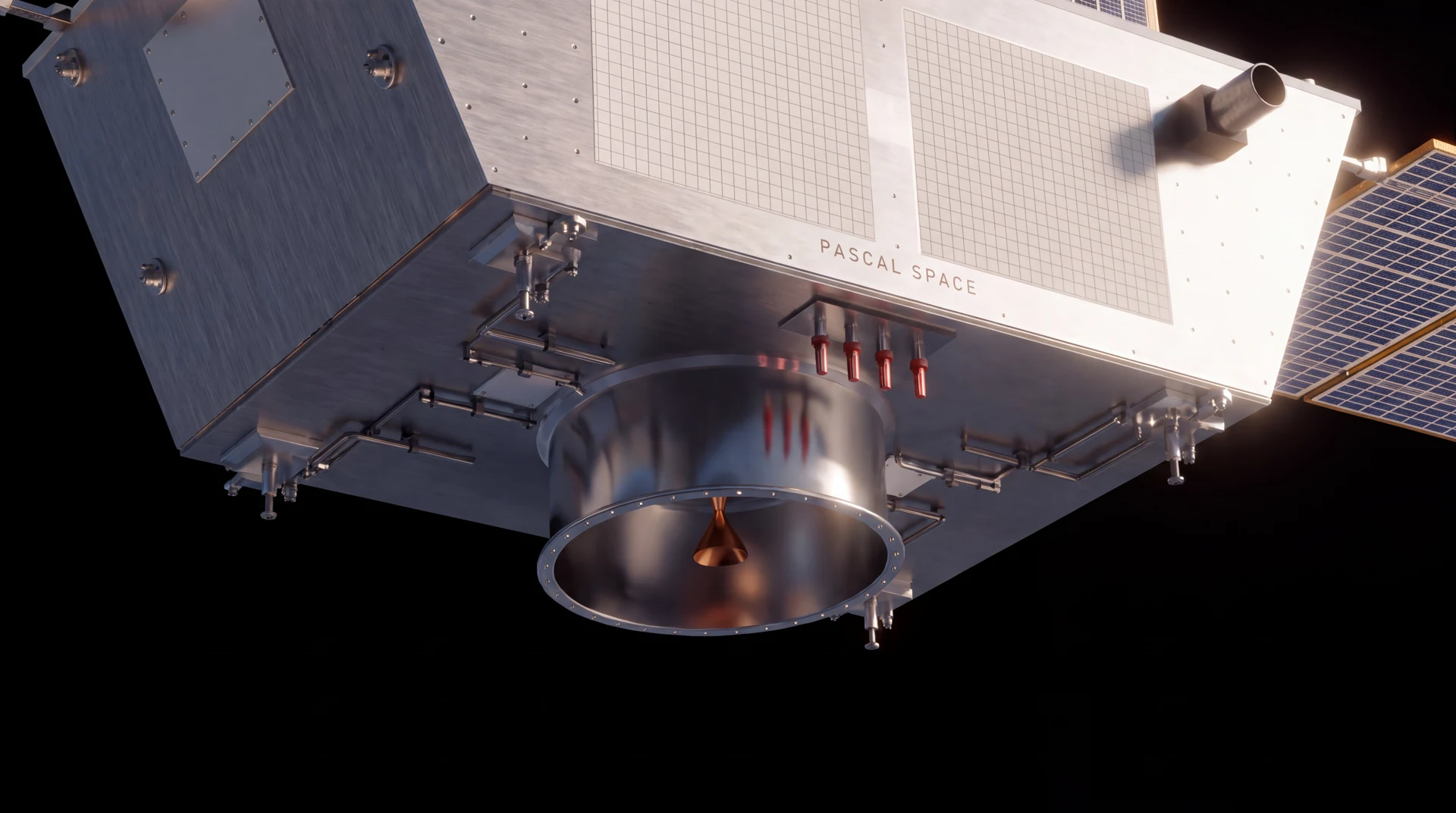
Restartable propulsion is central to the design: enabling a sequence of manoeuvres within a defined mission envelope.
Payload design target
Up to 300 kg
Initial mission scope
Low Earth orbit
Development status
Pre-flight
SAAR has not flown. Capabilities shown here are design targets, subject to engineering validation and mission planning.
Planned services
A vehicle.
More than one purpose.
Orbital delivery
From your launch orbit to your working orbit.
Payloads travel attached to SAAR from launch. The planned delivery envelope covers altitude and phasing changes in low Earth orbit, followed by deployment.
The first vehicle’s scope does not include docking, retrieving satellites, or arbitrary plane changes.
Discuss a delivery missionHosted payloads
Bring the instrument. Stay on board.
SAAR is being designed to carry hosted instruments through a mission, with shared vehicle resources and operations. Payload fit, interfaces, and operating needs are part of mission planning.
Hosting capabilities and resource allocations remain under development.
Discuss a hosted missionA closer look
SAAR, in detail.
01 / 02
Design targets
The working envelope.
A focused starting point for mission planning. These are development targets, not demonstrated flight performance.
- Destination
- Low Earth orbit
- Payload capacity
- Up to 300 kg
- Delta-v
- 800 m/s target
- Propulsion
- Green bipropellant
- Manoeuvres
- Restartable
- Pressurisation
- Self-pressurising
- Delivery scope
- Altitude & phasing changes
- Mission completion
- Planned self / hosted-payload deorbit
Final payload capacity, reachable orbit, and mission duration depend on the agreed mission profile and validated vehicle performance.
Let’s explore what’s possible
Where will your
mission take you?
Share your payload, destination, and mission needs.
See our vision beyond LEODiscuss a mission